Activity
Mon
Wed
Fri
Sun
May
Jun
Jul
Aug
Sep
Oct
Nov
Dec
Jan
Feb
Mar
What is this?
Less
More
Memberships
FA
Free AI University
3 members • Free
Mission Ready Systems
23 members • Free
HYROS Ads Hall Of Justice
4.8k members • Free
OfferLab
9.5k members • Free
FunnelHub Community
2.2k members • Free
AI Automation Agency Hub
307.2k members • Free
2CCX-Mastermind
150 members • Free
'One To Many' Mastery
1.7k members • Free
Conversation Domination
2k members • Free
301 contributions to Selling Online / Prime Mover

1d •
The One-Minute Fix That Stops Your Funnel Looking Abandoned
75% of Buyers Leave a Transaction Because the Site Looks Outdated. Is Yours? (Code Below 👇 To Fix This For Good) Scroll to the bottom of your page right now. What year does your footer say? If it says anything other than 2026 -- or if it's blank -- you have a trust problem. Small. Quiet. But real. Here's why it matters more than you think.. A 2024 survey of 500 US consumers found that 75% said they have skipped an online purchase because a website looked outdated or unprofessional. Not because the offer was bad. Not because the price was wrong. Because something on the page made them feel like the business wasn't active. An old copyright year is exactly that signal. What it communicates is this.. nobody is home. This funnel was built and forgotten. The person who made this doesn't care enough to keep it current. It's especially damaging on checkout and payment pages. An outdated year on a checkout page creates the impression that the technology is old and potentially insecure. That's the last place you want doubt entering your prospect's mind. The good news is the fix is permanent and takes about 60 seconds. Instead of typing a year in your footer that you'll forget to update.. use this snippet. It pulls the current year automatically from the browser. Every year it updates itself. You never think about it again. <div> © <span id="copyright"> <script> document.getElementById('copyright').appendChild( document.createTextNode(new Date().getFullYear()) ) </script> </span> Your Business Name </div> Replace "Your Business Name" with yours. Drop it into your footer in an HTML element. Done. One of those invisible details that nobody notices when it's right.. and everybody feels when it's wrong. 🚀 - James
4
0

2d •
The Invisible Layer Underneath Every Funnel That Nobody Talks About
Launching a funnel is already one of the most overwhelming things you'll do as an online business owner. Design. Copy. Graphics. Offer. Traffic temperature. Hooks. Follow-up sequences. VSL. Thank you page. Upsells. Downsells. And that's just the stuff you can see. Every one of those elements gets attention because you can see it. You can tweak the headline. You can adjust the button color. You can rewrite the hook. The visible layer of a funnel gets obsessed over because it's right there in front of you. But underneath every funnel is a second layer that most operators never look at. Not because they don't care. Because nobody told them it existed. The invisible layer looks like this.. Your SEO title and meta description -- the text Google and AI search engines use to understand and display your page. Most funnel pages have the platform default sitting there untouched. Your page speed -- visitors are leaving before your headline loads. Silently. Without a bounce notification. Without any indication in your analytics that speed is the problem. Your JSON schema -- the structured data that tells search engines and AI crawlers exactly what your page is and who it's for. Almost nobody in the funnel world has this configured. Your indexability -- whether Google is actually allowed to find your page. One accidental noindex tag and your page is invisible to search entirely. Permanently. Until someone checks. Your checkout flow -- not whether the page loads, but whether a real human on a real device can actually complete a purchase right now. These two things are not the same. Your SSL certificate -- a single expired certificate puts a security warning between your prospect and your page before they read a single word. Your email confirmation -- whether the automation actually fires after someone opts in or buys. Not whether it's set up. Whether it fired. Here's the painful part.. None of these show up in your funnel builder. None of them appear in your analytics. None of them send you an alert when something goes wrong.

3d •
There's a Tag on Your Page That Tells Google to Walk Away
PSA for everyone in this group running a CF funnel or website.. Go check your pages right now. Open your funnel page in a browser. Right-click anywhere on the page. Click View Source. Then hit Ctrl+F (or Cmd+F on Mac) and search for the word noindex. If you find something that looks like this.. <meta name="robots" content="noindex"> ..that page has been explicitly told not to appear in Google. Not ranked poorly. Not buried on page 47. Completely invisible. Google sees it and walks away. Here's what makes this particularly painful.. 96.55% of pages on the internet already get zero organic traffic from Google. The competition for the remaining sliver is fierce. But at least those pages are in the fight. A noindexed page isn't even allowed in the door. And the worst part -- it's usually an accident. A staging site setting carried over to production. An SEO plugin that defaulted to noindex during an update. A theme setting nobody knew was there. A developer checkbox that got ticked and forgotten. Nobody did this on purpose. Nobody knew it was happening. The page just sat there -- live, loading, accepting ad traffic -- while Google quietly ignored it every single day. The fix once you find it is simple. In ClickFunnels every page has an SEO settings section. There's a toggle or checkbox that controls whether the page is indexable. If it's turned off, turn it on for pages you want Google to find -- your blog posts, your main landing page, your Funnel Hub homepage. Most funnel pages you don't want indexed -- checkout pages, upsell pages, member areas, thank you pages. Those should stay noindex. But your front door? Your content? Your free offer page? Those should be open. Go check. Takes 60 seconds. 🚀 - James
1
0

4d •
The Hardest Question You'll Ever Answer as a Business Owner
One of the hardest questions you'll ever answer as a business owner is this.. What is the core problem I actually solve? Not the surface problem. Not the symptom. The real one underneath everything else. Most people never get there. They describe what they do -- "I help people build funnels" or "I help coaches get clients" -- and stop at the first layer. Which means their messaging sounds like everyone else's. Because everyone else stopped at the first layer too. Here's a technique I picked up today that I think is genuinely useful. Start with any problem you solve. Just pick one. Doesn't have to be the most important one. Just one you're confident about. Then go upstream. Ask: what caused that problem? What's the problem that created this problem? Write it down. Then ask again. What caused that? Keep going as many iterations as you can until you genuinely can't go further. Then go back to your original problem and go downstream. Ask: what does this problem create? What's the new problem that this problem causes if it isn't solved? Write that down. Then ask again. What does that create? Keep going as many iterations as you can. Now do the same thing for two or three other problems you solve. Go upstream and downstream on each one. Here's what happens when you do this properly.. One problem keeps appearing in multiple chains. It shows up as an upstream cause of several different problems. It shows up as a downstream consequence of several others. It sits at the center of everything. That's your root. That's the real problem your business exists to solve. Not because you decided it was -- because the chains led you there independently. When you find it, your messaging changes completely. Because you're no longer describing a symptom. You're naming the thing underneath the symptoms that your ideal client has been feeling for years without being able to articulate it. When you put words to someone's unspoken problem before they do.. they stop scrolling.

5d •
Why Describing the Problem Never Works as Well as Showing It
The best salespeople don't convince people they have a problem. They show people their problem. There's a big difference. Eugene Schwartz spent years studying how buyers move through awareness. In Breakthrough Advertising he described the hardest prospect of all -- someone who doesn't yet know they need what you offer -- as "the most difficult, the most challenging problem of all." His description of that person is worth sitting with.. "The prospect is either not aware of his desire or his need -- or he won't honestly admit it to himself without being lead into it." He went further. These people, he wrote, "are still the logical prospects for your product; and yet, in their own minds, they are hundreds of miles away from accepting that product. It is your job to bridge that gap." And the gap itself? He described it as a psychological wall. "On one side of that wall is indifference; on the other, intense interest." Here's what Schwartz never said but what follows directly from his framework.. That wall doesn't come down from being told about a problem. It comes down when the prospect feels it personally. Most marketing tries to describe the problem in general terms. Category statements. Industry stats. Stories about someone else. At best this creates intellectual agreement. Intellectual agreement doesn't move people. Here's what moves people.. A mechanism that shows your prospect their specific problem. Not a story about someone like them. Something that takes their actual situation and reflects it back to them with enough specificity that they can't dismiss it as someone else's problem. An audit. A quiz. A free assessment. A diagnostic tool. A checklist they fill out about their own business. Anything that makes the invisible visible for them specifically. The psychological wall -- indifference on one side, intense interest on the other -- comes down the moment they see their own numbers. Their own score. Their own three flagged items. Discovered pain is always more powerful than described pain.
1
0

1-10 of 301
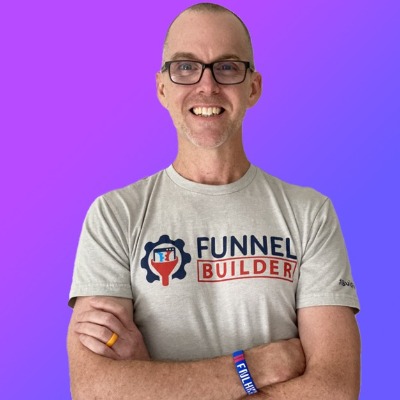
@james-curran
Find Funnel Leaks and Fix Them with https://www.funnelpulse.io
Active 2h ago
Joined Aug 13, 2024
INTJ
Powered by