Activity
Mon
Wed
Fri
Sun
May
Jun
Jul
Aug
Sep
Oct
Nov
Dec
Jan
Feb
Mar
Apr
What is this?
Less
More
Memberships
ST3
909 members • Free
8 contributions to ST3
6d •
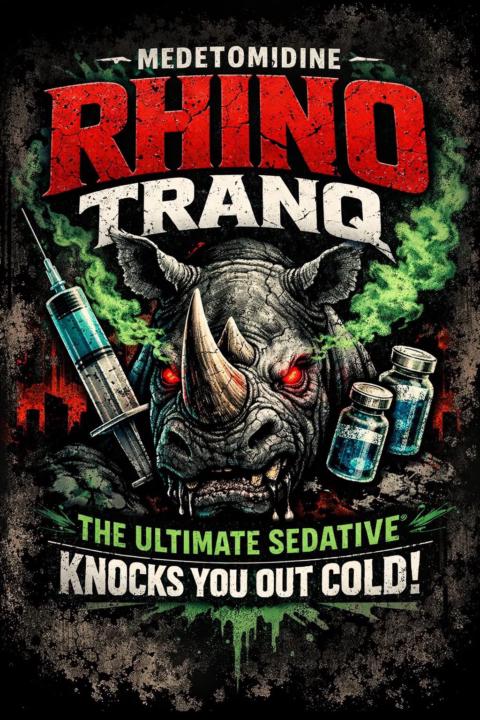
WARNING: NEW DRUG IN THE DRUG SUPPLY
There’s a drug showing up in fentanyl supply that most people haven’t heard of yet. It’s called medetomidine -street name “rhino tranq”. It’s a veterinary tranquilizer, 100 to 200 times more potent than xylazine which had previously caused havoc. It’s been linked to four overdose deaths in California so far. It doesn’t respond to naloxone. Let me say that again. Narcan doesn’t reverse it. In Philadelphia, it went from appearing in 29% of the drug supply in May 2024 to 87% by November. Xylazine dropped from 97% to 42% in the same period one dangerous adulterant was replaced by another almost overnight. The pattern is now reaching across North America. Here’s what concerns me as an Addiction Expert: Most treatment programs are still building their protocols around fentanyl and xylazine. The drug supply is already moved past that. Patients are showing up with substances in their systems that standard drug tests can’t even detect. Withdrawal from medetomidine can require ICU level care, and the clinical teams treating these patients may not know what they’re dealing with until it’s too late. Meanwhile, national overdose deaths are declining for the first time in years, down almost 19% according to the latest CDC data. That’s genuinely good news, but it’s masking what’s happening underneath: the drugs on the street are getting more complex and more unpredictable and harder to treat. And this isn’t even considering the novel potent opioids,such as those in the nitazine family. The crisis isn’t ending -it’s evolving. The treatment programs that will save the most lives in 2026 are the ones updating their protocols as fast as the drug supply is changing. Reminder: This does NOT respond to Naloxone.
0 likes • 6d
Out of the frying pan and into the inferno. Anybody out there have protocols in place to respond to this latest wave of killer sedatives? Would love to hear what works...
7d •
A Couples Trauma Lesson
Nobody told you this when you were growing up. And nobody's telling you now. So I will. If your childhood was rough, and by rough I don't mean movie-rough, I mean the quiet kind, the kind where your needs were too big for the room, the kind where your feelings were met with irritation instead of comfort, the kind where you learned very early that the world wasn't going to meet you where you were so you better figure out how to meet it where it is. If that was your childhood. Then you are walking around with a reduced capacity to feel good. I don't mean that metaphorically. I mean neurologically. Your system was built in an environment that wasn't safe. And a system built in an unsafe environment doesn't just carry memories of unsafety. It carries the architecture of unsafety. The wiring. The defaults. The automatic settings that run underneath every experience you have as an adult. Including the good ones. Especially the good ones. And this is the part that nobody talks about because it sounds counterintuitive and it's true. Traumatized people don't just struggle with pain. They struggle with joy. They struggle with good. They struggle with the moments that are supposed to feel safe and happy and warm and connected because those moments activate something most people wouldn't expect. Fear. Not fear of the good thing. Fear of losing the good thing. Because if your childhood taught you anything, it taught you that good doesn't last. That warmth disappears without warning. That the thing you depend on can be taken. That the person you need can change, leave, shut down, turn cold, or simply stop being available in the space between breakfast and dinner. Your childhood taught your body that love is temporary. And your body never unlearned that lesson. So now you're an adult. And you fall in love. And the love is real. And the person is real. And the connection is deep. And your heart opens in a way it hasn't opened since you were small enough to not know any better.
0 likes • 6d
Greatful for this lesson... I don't even have the words right now, just need to say you have described my life, the why of so many things, including why I intentionally ended my marriage to the person I know is my soulmate. Thank you.
11d •
CALL FOR PRESENTATIONS!
The Georgia School of Addiction Studies (GSAS) has extended its Call for Presentation deadline to Tuesday, March 31st. The 2026 conference will be held August 30 – September 3, 2026, at the Hyatt Regency in Savannah, Georgia. Throughout the four-day conference participants will have access to three and six-hour workshops on topics related to their work in the fields of prevention, treatment, and recovery. I am personally speaking for 3 hours at this conference on Political Outrage Cycles, and I hope many of you will join me for this tremendous IN PERSON conference in sunny Savannah by being a presenter or attending! Expense and speaking fees are available! If you are interested in supporting GSAS by conducting a workshop or workshops, please follow this link for more information: https://events.decorporate.ca/GSAS2026/abstract/login.php The deadline to submit is March 31, 2026. Final selections will be made by May 4, 2026. If you should have any questions, please email info@thegeorgiaschool.org Thank you and we look forward to seeing you in Savannah. Georgia School of Addiction Studies www.thegeorgiaschool.org
0 likes • 11d
Have always enjoyed hearing you speak Crystal, your knowledge and passion are inspiring, and the topic: Political Outrage Cycles! Sadly I cannot attend, boy would I loveto be a fly on the wall! Best of Luck, and enjoy the conference.
0 likes • 11d
🙃
18d •
Should we do a community online meet up ?
Hi Ya'll! We have the option on Skool here to host an online community meet up! We could meet each other and share maybe an hour with our colleagues chit chatting about whatever we need to chit chat about. Would this interest anyone? If so, what would be your ideal days and times? Looking forward to your feedback!
Poll
35 members have voted
0 likes • 18d
An online meet-up sounds good. Crystal maybe you could choose 3 dates/times and everyone pick what works best for them, and we go with that. Thoughts?
1-8 of 8
@suzanne-clancy-6572
Uniting Fine Art & Alternative Healing Methodologies with education in Human Behaviour & Addictions Suzanne inspires others on their Healing Journeys
Active 6d ago
Joined Mar 4, 2026
INFJ
Toronto Canada
Powered by