
Write something

4h •
🍌 Plantain vs. Banana: The Professional Breakdown
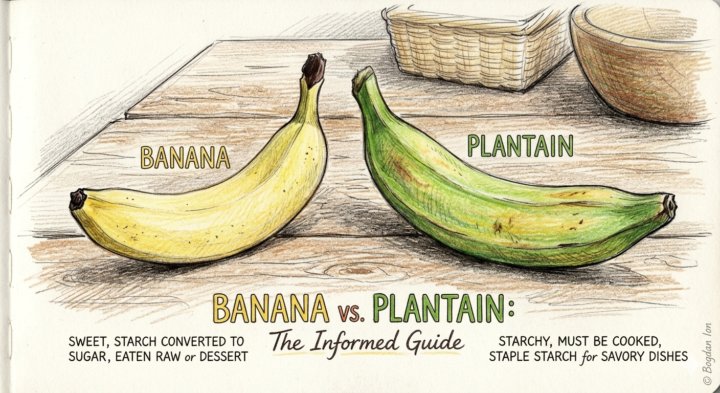
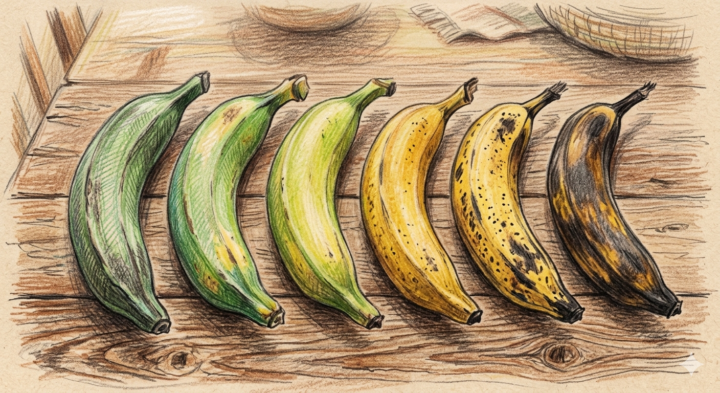
One of the most common questions in the kitchen is: "Can I just use a regular banana if I can't find a plantain?" The short answer? F. No! While they look like cousins, they behave like completely different ingredients in the pan. The Big Differences - Starch vs. Sugar: Bananas are high in sugar and low in starch, making them soft and sweet. Plantains are the opposite—they are very high in starch and lower in sugar. - The "Raw" Rule: You can eat a banana raw, but you almost never eat a plantain raw. It’s dense, dry, and has a "chalky" texture until heat transforms the starches. - Culinary Role: Bananas are for dessert. Plantains are a staple starch, acting more like a potato or a yam in savory cooking. Texture & Flavor by Ripeness As you can see in my sketch, the skin color is your "GPS" for flavor: 1. Green: Rock hard and neutral. It tastes like a savory potato. This is what you need for Tostones. 2. Yellow: The starch is starting to turn to sugar. It’s slightly softer and has a mild, balanced sweetness. Great for mashing. 3. Black: This is when they are at their sweetest. The texture is soft and the flavor is deep and caramelized. These are used for Maduros (sweet fried plantains
4h •
🍳 Classic Tostones (Double-Fried Green Plantains)
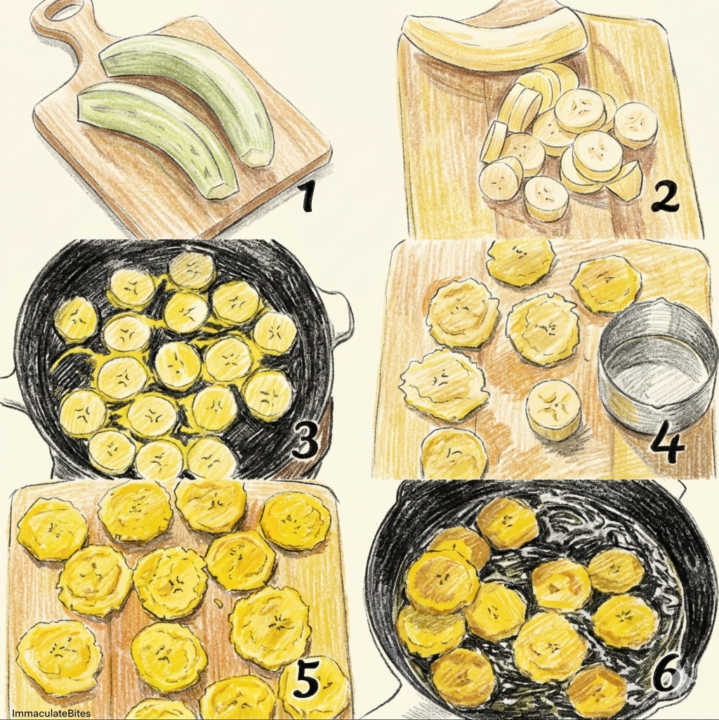
Tostones are the ultimate "Kitchen Passport" snack. The secret is the double fry: the first fry cooks the inside, and the second fry creates that world-class crunch. Ingredients: - 2 Large Green Plantains ( In the sketch chosenr 2 or 3) - Neutral oil for frying (Vegetable or Canola) - Sea salt - Optional: 2 cloves of mashed garlic mixed with a little water and salt. Instructions: 1. Peel & Slice: Cut the ends off the plantains. Score the skin lengthwise and peel it back with your thumb. 2. Slice the plantain into thick rounds (about 2.5cm / 1 inch thick). 3. The First Fry: Heat about 2cm of oil in a pan over medium heat. Fry the chunks for about 3–4 minutes per side until they turn light golden and soft. They shouldn't be "crispy" yet. 4. The Smash: Remove them and drain on a paper towel. While they are still warm, use the bottom of a heavy glass or a "tostonera" (press) to smash them flat until they are about half their original thickness. 5. The Flavor Bath (Optional Pro Tip): Quickly dip the smashed plantain into your garlic-salt water and pat it dry immediately. This adds an incredible depth of flavor. 6. The Second Fry: Increase the heat slightly. Fry the flattened discs again for 2 minutes per side until they are deep golden and "glass-crunchy" on the edges. 7. Finish: Drain again and hit them with a generous pinch of salt while they are still hot. 8. Serve with your favorite dipping sauceans a squeeze of lime. Chef’s Challenge: If you make these, try serving them with a simple garlic mojo or even just some fresh lime. Post a video of that "crunch" sound below! 👇🔥
2
0
2d •
🌱 From Balcony to Board: My Spring Garden Update
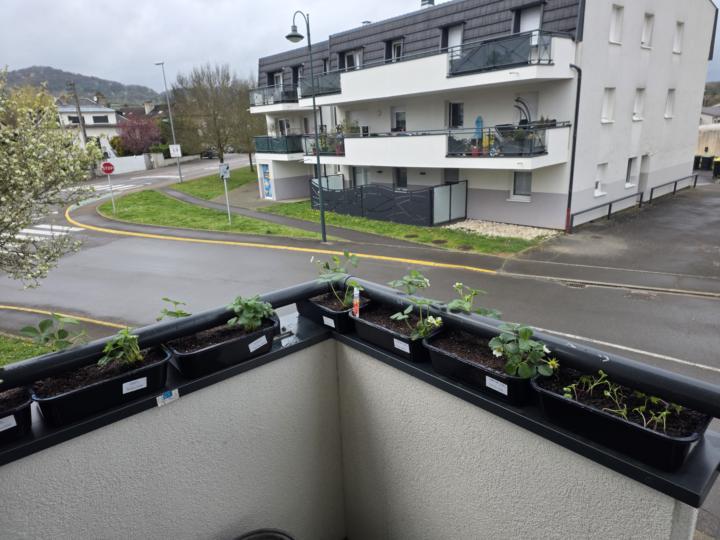
There’s nothing like the feeling of getting your hands in the dirt! Today was all about setting up the balcony garden, and I’m finally seeing some life poking through. Growing your own ingredients is the ultimate "Kitchen Passport" it’s the shortest distance a product can travel to your plate. Here is the current status of the balcony: - The Early Birds: My spring onions and radishes are officially sprouting! - The "Survivor": I planted three butternut seeds, but only one has made it to the surface so far. It’s a reminder that nature has its own pace. - The Slow Burners: The parsley and yellow carrots are taking their time, but I can see them starting to push through. - The Big Risk: I’ve just moved my tomato and cucumber seedlings outside for their first night. It’s always a nervous moment; fingers crossed they handle the drop in temperature! 🤞❄️ - The Future: Just finished planning out the strawberries. There’s nothing like home-grown berries in a few months. 💡 Chef’s Tip for Small Gardens: When space is tight on a balcony, focus on "High-Value" crops. Things like parsley and spring onions are expensive to buy fresh every week, but they are incredibly hardy and easy to grow in small pots. Discussion: Are any of you growing your own ingredients this year? Whether it’s a full garden or just a single pot of basil on a windowsill, I want to see it! Drop a photo of your "green" progress below! 👇🌿
5d •
Because I like them more!
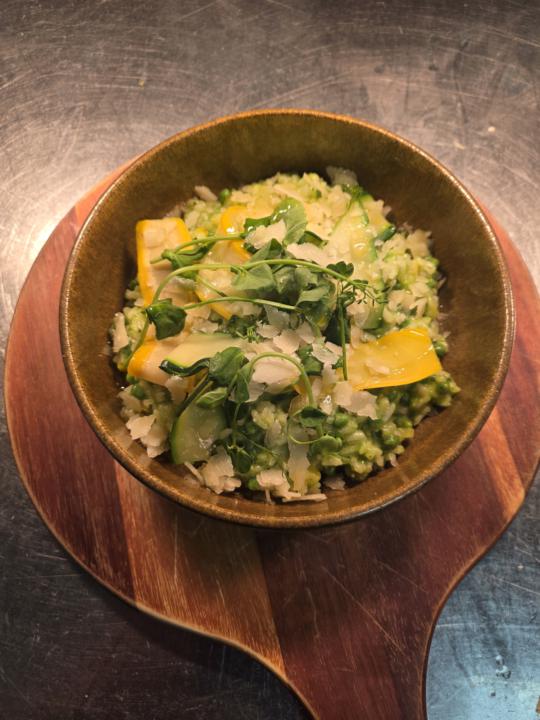
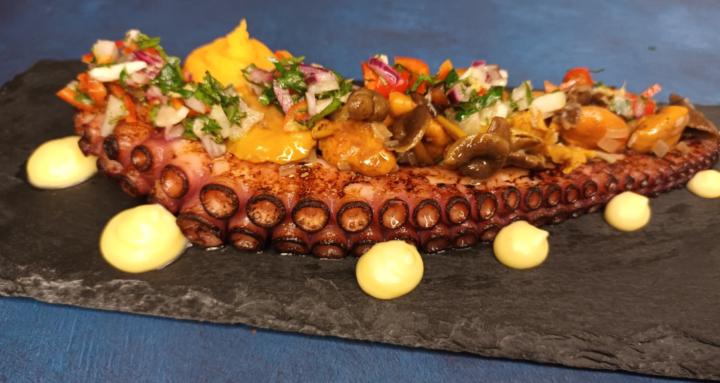
Someone asked why we put the colored creion sketches and not a real photo. BECAUSE I LOKE THIEEM MORE! I use these sketches because they are the signature style of Kitchen Passport. Just like a chef’s personal notebook, they help us focus on the technique and the '"soul" of the food rather than just a polished, filtered photo. Just to prove that the food is actually real. Here is the original
2
0
1-30 of 113
powered by
skool.com/kitchen-passport-1509
From the world's kitchen's to the family tabel.
Learn global chef secrets and professional techniques, adapted for quick and flavourful family meals
Suggested communities
Powered by