
Write something
Pinned

🔥
2d •
The One-Channel Mistake That's Costing You Qualified Inbound
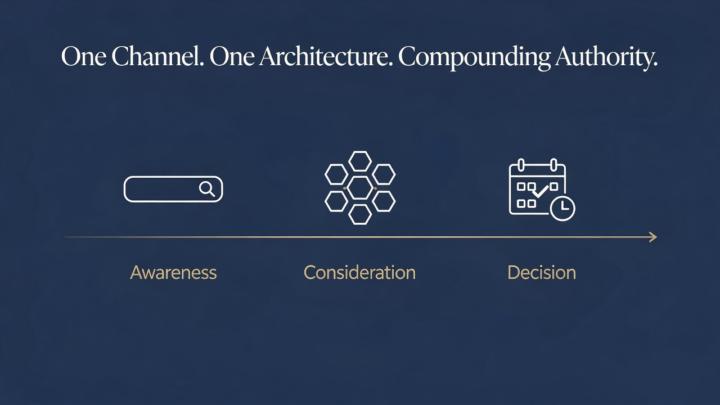
Most coaches and consultants I speak to have the same instinct when they start on YouTube. They want one channel that does everything, builds trust, demonstrates expertise, and converts prospects, all at once. So they post a technical deep-dive one week and a reflective personal update the next. The result is a channel that attracts viewers but not buyers. Watch time goes up. Inbound enquiries don't follow. Here's what's actually happening. Your YouTube channel is not a broadcast platform. It's an Authority Estate, a portfolio of digital assets, each one occupying a specific piece of search territory your ideal client is already searching. Every video is a deed of ownership over a specific problem, question, or transformation. When content is mixed - expert one week, personal the next - the estate has no coherent architecture. Prospects arrive, get value, and leave. The trust doesn't compound because the positioning isn't consistent. The fix isn't a second channel. It's a clearer content brief for the one you have. Every video should pass one test before scripting begins: could a prospect watch this alone and arrive at a discovery call already knowing your methodology, your positioning, and why you're the right choice? If yes, it belongs on the channel. If not, it's content - not an asset. Where are you currently in this? Drop your answer below. The most common roadblock becomes next week's video.
Poll
5 members have voted
Pinned
🔥
8d •
Face-to-cam or full production? Here's the actual rule.
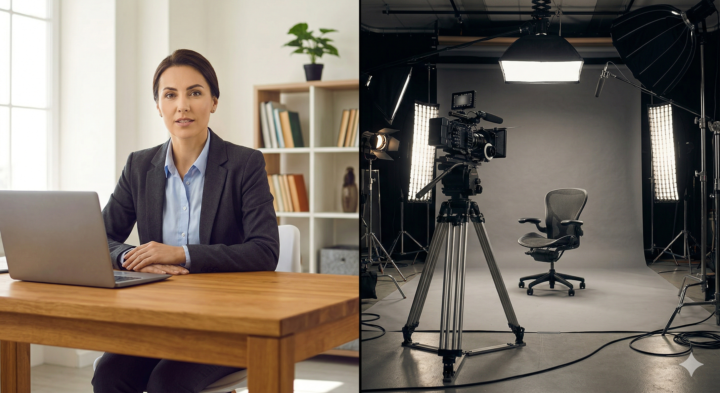
It's the question I'm asked more than almost any other. And the answer is rarely what most coaches expect. Your prospect doesn't care how polished the video looks. They care whether you seem like someone who understands their problem. A beautifully produced video with the wrong message loses to a simple face-to-camera clip that names the exact frustration your ideal client was feeling. That said, there is a floor. Here it is: Audio first - always. Muddy audio signals amateur. Clean audio signals professional. A £30 lapel mic and a duvet behind you beats a ring light and the MacBook's built-in microphone every time. Lighting second. Your face must be clearly visible with no harsh shadows. Natural window light is usually enough. Everything else is optional until you're consistently generating inbound enquiries and you want to remove any remaining friction. The coaches and consultants I see stuck on this are almost always using production quality as a proxy for readiness. "Once the setup is perfect, then I'll start." The setup is never the problem. The message is. One face-to-camera video that speaks directly to a real client challenge will do more for your inbound pipeline than any fully produced video on a topic nobody is searching for. Get the message right first. Then improve the packaging. Reply below with where you stand right now - full production setup, face-to-camera only, or still waiting for the right moment. I'll give you a direct read. 👇
Pinned
🔥
Feb 24 •
What Is The Difference?
So, what is the difference between The Content Revenue Lab and this new community? Quite a lot, actually. In the Content Revenue Lab, I teach over 40s how to monetise their YouTube channels. Whether that's via a Skool community or digital products, and even courses. This community is actually set up to work with COACHES AND CONSULTANTS who already have coaching and consulting clients. You're already using social media, but you either haven't thought of using YouTube or never knew you could actually get leads from it. In this community, we also teach you how to use YouTube as your customer service agent, your marketing agent, and your sales agent. Believe it or not, YouTube can do all three.

🔥
3d •
Google just made your production excuses irrelevant
Google Vids now generates video clips from a text prompt. Custom music from a brief. AI avatars you can direct and place in scenes. And when you're done, publish straight to YouTube - no downloading, no re-uploading. The free tier gives you 10 video generations a month with any Google account. No paid subscription. No new software. No studio. The barrier to getting something on camera just hit zero. Which means the coaches and consultants are still waiting until they have better equipment, a proper backdrop, or more time - that window just closed. The question was never whether you could produce a video. It was always whether you had something worth saying and a system to say it consistently. That part hasn't changed. What's your current biggest production blocker - equipment, time, or something else?

🔥
4d •
Most coaches blame AI for generic content. The problem is earlier than that.
AI produces generalities when you give it generalities. Feed it a topic, "content marketing for coaches" and it returns the kind of output that sounds fluent, structured, and identical to everything else in your niche. That's not a failure of the tool. That's a failure of the input. The fix is a step most coaches skip entirely: let the AI interview you before you ask it to produce anything. Not "give me a post about X." Interview. Dig into a specific client situation. A belief you hold that contradicts the standard advice in your field. A moment from a client engagement that didn't go to plan, and what you learned from it. The kind of thing that never makes it into a standard prompt because it doesn't feel like "content." That context - your actual experience, your actual IP - is the only thing AI cannot manufacture on your behalf. Once that's in, the output is different. It sounds like you because it came from you. I use NotebookLM as part of this process. It's particularly effective at drawing out the non-obvious material, the stuff you know but haven't thought to say. The question for the room: when you use AI for content, where does it actually fall down for you? Generic output, wrong tone, missing your specific framing, or something else? Drop it below. I'll pull the patterns and build a resource around whatever surfaces most.

1-30 of 43
powered by
skool.com/the-authority-engine-7664
YouTube-led lead generation for Coaches and Consultants. Build an Authority Engine that attracts inbound clients - without chasing referrals.
Suggested communities
Powered by