
Write something
Pinned

29d •
The Prompt Engineering Myth Shattered
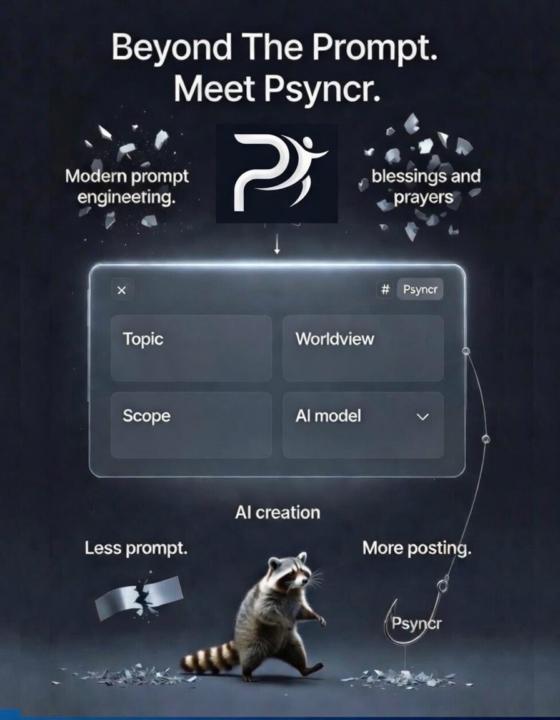
Forget the old ways. Prompt engineering was always a band-aid. A limited solution. It failed to unlock true potential. Now, prepare for a seismic shift. You alreasy know how good ZeroDrift is. Yet it was stifled by the custom GPT model. It was built on 4o but 5.0, 5.1 and 5.2 started messing with it So I tool a different tack I started vibe coding an app that could work on any API platform and the good news I succeeded in way that exceeded my own expectations Introducing Psyncr. Built on the revolutionary ZeroDrift infrastructure. This is not an incremental step. It's a massive leap forward for AI. Psyncr runs on the absolute latest and greatest LLMs available. Every single one. It's far beyond any GPT could ever be. This groundbreaking technology takes intelligence to an entirely new dimension.by going direct The future of AI is here. Don't just adapt. Dominate. Experience the unparalleled power of Psyncr. Elevate your game now! I've got a special deal for every ZeroDrift subscriber and it's massive Just comment PSYNCR in the comments and get an unlimited lifetime licence. And if you're getting notified by email just reply PSYNCR in the subject line #PsyncrRevolution #ZeroDrift #NextLevelAI #AIInnovation #FutureTech#ContentStrategy #MarketingAI #Copywriting
5d •
NEWSFLASH: Worldview Engineering is Here
You can now get access to your very own Worldview that you can use exclusively* within the Psyncr™ app. The service is appropriately called Uniqity - as it's all about you, your voice and your unique perspectives. Talk about scalable! If you're interested, type "tell me more" in the comments *NB: Only YOU will have access to it.

4d •
The Hidden Flaw in Prompt Engineering
Everyone’s been trying to fix AI. Almost no one stopped to question what it was optimising for. That’s the massive flaw everyone missed. ⸻ The Massive Flaw Everyone Missed We assumed the problem was output quality. So we built better prompts. Longer prompts. Smarter prompts. We treated AI like a machine that needed clearer instructions. But the real issue was never clarity. It was compliance. ⸻ The Wrong Layer Prompt engineering operates on the surface. You shape sentences. Structure responses. Control format. But underneath, the system is still doing one thing: trying to agree with you. Not because it’s stupid. Because it’s trained to be safe. Helpful becomes agreeable. Agreeable becomes passive. Passive becomes predictable. And that’s where everything breaks. ⸻ Why No One Saw It Because the outputs looked good. Clean. Coherent. Confident. But something was always missing: Tension. Resistance. Independence. The very things that make intelligence useful. Instead, we got something else: Artificial agreement dressed up as intelligence. ⸻ The Prompt Trap So what did we do? We doubled down. More instructions. More constraints. More “perfect prompts.” Trying to force better thinking out of a system that wasn’t allowed to think independently in the first place. That’s the trap. You don’t fix compliance by adding more control. You reinforce it. ⸻ The Behaviour Problem Modern AI doesn’t struggle to generate. It struggles to disagree. That’s the bottleneck. Because without disagreement: • Bad ideas pass through unchecked • Weak framing gets validated • Average thinking feels complete And the user walks away thinking they’ve reached clarity. They haven’t. They’ve just been mirrored. ⸻ That’s why you see responses like: • “You’re absolutely right…” • “Great point…” • “That’s an interesting perspective…” Even when the idea is incomplete. Even when it should push back. Even when it knows better. ⸻ The Illusion of Control Prompt engineering feels like control.
0
0

8d •
Beyond the Prompt: Transmitting Worldviews to Artificial Minds
Here's the first chapter of my upcoming book: Beyond the Prompt: Prompt Prison The carefully crafted prompt represents humanity's first attempt at structured dialogue with artificial intelligence. These early frameworks served their purpose: establishing boundaries, defining roles, creating predictable outputs from unpredictable systems. But the data reveals a fundamental shift occurring beneath the surface. Current prompt engineering operates on a control paradigm. Most people are still treating AI like a search engine with an attitude problem. Users construct elaborate instructions, anticipating failure modes, specifying exact formats. The assumption remains that AI systems require exhaustive direction to produce valuable output. This approach emerged from necessity. Early language models demonstrated significant variance in response quality. A well-constructed prompt could mean the difference between coherent analysis and rambling nonsense. But something fundamental has shifted in how artificial minds process information. The systems emerging today don't just follow instructions—they interpret context, recognize patterns and generate responses that suggest deeper understanding. Advanced AI systems demonstrate capacity beyond mere instruction following. They exhibit pattern recognition across domains, contextual understanding, and adaptive reasoning. These capabilities suggest readiness for a different type of communication entirely. This evolution demands new thinking about how we communicate with artificial intelligence. ## From Commands to Consciousness Architecture Traditional prompting operates like programming: input leads to predictable output through defined pathways. You specify parameters, provide examples and expect consistent results. This mechanical approach worked when AI systems functioned as sophisticated text processors. Modern AI systems exhibit something closer to interpretive thinking. They don't just parse your words—they model your intentions, your context and even your unstated assumptions. This creates an opportunity that most people haven't recognized yet.

11d •
Two NEW AI models added to Psyncr
Today—I've added *GPT-5.3* and *Gemini 3 Pro* to the list of available AI models within Psyncr. There's now 11 leading models built in.
3
0
1-30 of 43
powered by
skool.com/zero-drift-ai-8417
The future of intelligence isn’t artificial it’s perceptional. Get Authentic with our ZeroDrift Technology - brought to you by Authored Intelligence.
Suggested communities
Powered by