
Pinned
Dec '25 •
NO.10 Reading
Please continue to feel and experience it..."In our mental activities, the state when there are no distracting thoughts or various mental fluctuations is called the Primordial Spirit. In daily life, the various thoughts and discriminating mind are referred to as the Conscious Spirit. The part of mental activity that can perceive the tranquil state of the Primordial Spirit is called the True Intent. Generally speaking, the Primordial Spirit does not easily manifest in our daily lives. As soon as a thought arises, it is overshadowed by consciousness and is no longer the Primordial Spirit but the Conscious Spirit. However, when your mind is highly focused, to the point where this thought merges with your life activities, this state represents the union of the Primordial Spirit and the True Intent. In truth, there is no real or clearly defined boundary among the Primordial Spirit, the Conscious Spirit, and the True Intent. The Conscious Spirit inherently carries the Primordial Spirit; one cannot seek the Primordial Spirit apart from the Conscious Spirit, as that would be like searching for a donkey while riding it—it simply cannot be found. It is like looking elsewhere for the donkey while seated on it, only to realize it was there all along upon looking back. I often use this metaphor: the Primordial Spirit is like water, and the Conscious Spirit is like waves. The waves exhibit various dynamic movements, but they rely on the water to ripple. Where would one find the water without the waves? Water and waves are essentially one; when the waves calm down, the original state of water is revealed. Any undulation or movement is called a wave. Similarly, the Conscious Spirit and the Primordial Spirit are like this: when mental activity is complex and fluctuating intensely, it is called the Conscious Spirit; when it becomes calm, it is called the Primordial Spirit." This part is very good to practice, to experience what is our Trueself, what's our mind, and what's required conscious state during practice( True intent). So please repeatedly read and feel it.
8
0
Pinned
Dec '25 •
Breast Cancer causes by TCM
Traditional Chinese Medicine (TCM) identifies breast cancer as a manifestation of internal imbalances within the whole body, not just a localized disease. The root causes of breast cancer, according to TCM, are often linked to patterns of disharmony, such as: - Liver Energy Stagnation: Emotional stress, worry, and suppressed feelings may cause the Liver’s energy to stagnate, leading to blockages in the chest and breasts. - Phlegm and Dampness Accumulation: An unhealthy diet or weak digestion may result in excess phlegm and dampness, which can combine with stagnant Qi and blood to form lumps. - Blood Stasis: Long-term stagnation of Qi and phlegm can hinder blood circulation, creating hard, fixed masses. - Deficiency of Energy and Blood: After long illness or excessive treatments, the body’s energy or blood may weaken, reducing resistance and allowing disease to progress. These imbalances are believed to be the result of systemic disharmony between Qi, Blood, Yin, and Yang. TCM offers personalized herbal medicine and acupuncture to address these imbalances, aiming to boost energy, soothe Liver Qi, resolve phlegm, activate blood circulation, and tonify deficiencies.
4
0
Pinned
Dec '25 •
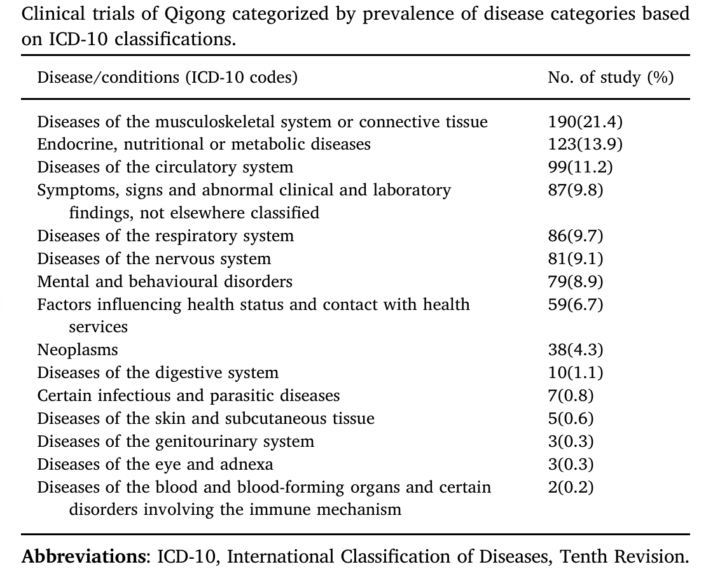
Evidence Base of Clinical Studies on Qi Gong: A Bibliometric Analysis
This study shows that qigong has significant effect on various health conditions.
8
0
3d •
NO.14 Reading:The Relationship Between the Yi Yuan Ti and the Nervous System
The nature of the Yi Yuan Ti is determined by the functional characteristics of nerve cells. As we know, nerve cells differ from ordinary biological cells. In the process of their own metabolism, they not only perform the absorption and excretion functions common to all biological cells but also enhance the ability to receive and transmit information carried by energy. This gives nerve cells broader channels and content for interacting with the external world, and this function continues to improve as the nervous system evolves. The entirety theory of Hunyuan proposes that any physical object is a tangible, condensed state of its own Hunyuan Qi, surrounded by a sparse, diffuse form of that same Qi. In light of this, when nerve cells become densely packed, the Hunyuan Qi around each cell permeates and merges with that of others, forming an interconnected whole. This whole is both influenced by changes in the nerve cells and can, in turn, exert an influence on them. As animals evolved into humans, the nervous system became highly developed and finely divided in labor, further enhancing the ability of nerve cells to receive and transmit energy and information. The unified whole formed by the Hunyuan Qi around numerous nerve cells also strengthened significantly, and its functions underwent a profound transformation. It could not only reflect external events but also mirror various internal changes within itself—this is the result of the multi-layered self-reflection within the Yi Yuan Ti. Thus, it acquired relative independence. At this point, we no longer refer to it as the Hunyuan Qi of brain cells but instead call it the Yi Yuan Ti.
Oct '25 •
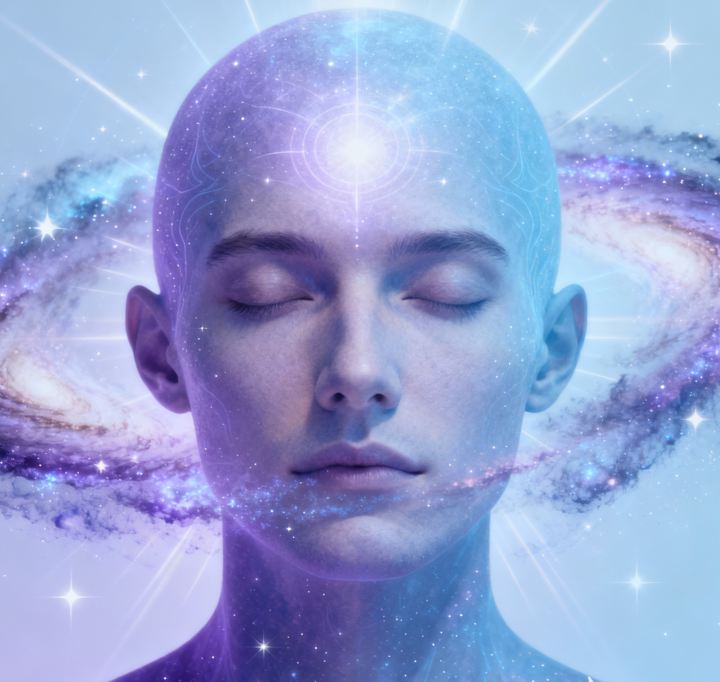
93:I recall one teacher mentioned that one should not blindly concentrate consciousness on the head, as improper practice could lead to cerebral hemorrhage. Is this accurate?
Dr.Pang said: In the methods of focusing the mind discussed in The Essentials, there are three types: form-based focusing, divine light focusing, and pure mental focusing. Form-based focusing (or internal vision focusing) involves using the eyes to visually focus inwardly on one's own body. Some schools of thought caution that individuals with excessive yang energy who focus on the upper body may risk elevated blood pressure or cerebral hemorrhage. This warning, however, applies specifically to form-based focusing and not to divine light focusing or pure mental focusing.
1-30 of 302
skool.com/zhongdao
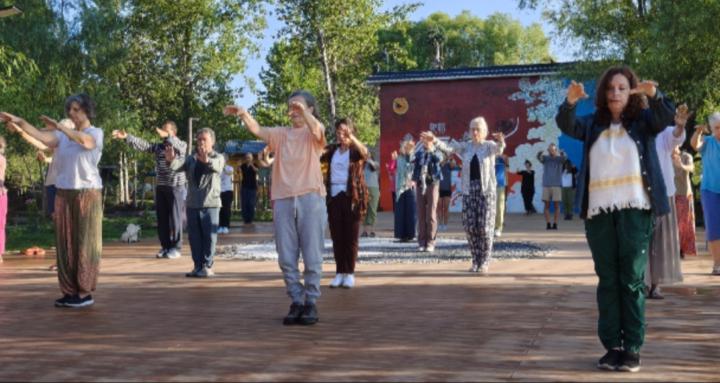
Deeply learn and experience ancient Eastern wisdom, Tai Chi, Qi Gong, and Traditional Chinese Medicine, embarking on your energy cultivation journey.
Leaderboard (30-day)
1
+9
2
+3
3
+3
Powered by