Activity
Mon
Wed
Fri
Sun
May
Jun
Jul
Aug
Sep
Oct
Nov
Dec
Jan
Feb
Mar
Apr
What is this?
Less
More
Memberships
UniteThe99
722 members • $1/m
2847 contributions to UniteThe99

🔥
8h •
🛸👀
We shot down FOUR things over the United States, and THREE of them we have NO IDEA what they are” 👽🛸 “For the first time in 65 years, the United States shot something down over our airspace not once but four times. Three of those four things we have no idea what they are. “We’ve been seeing objects flying over restricted airspace, immediately it was about UFOs and flying saucers and aliens.” “These are important questions, the American people deserve to know.” Is this real UFO/alien disclosure, or advanced foreign tech sneaking into our skies? 🔥
1
0


🔥
15h •
Copan
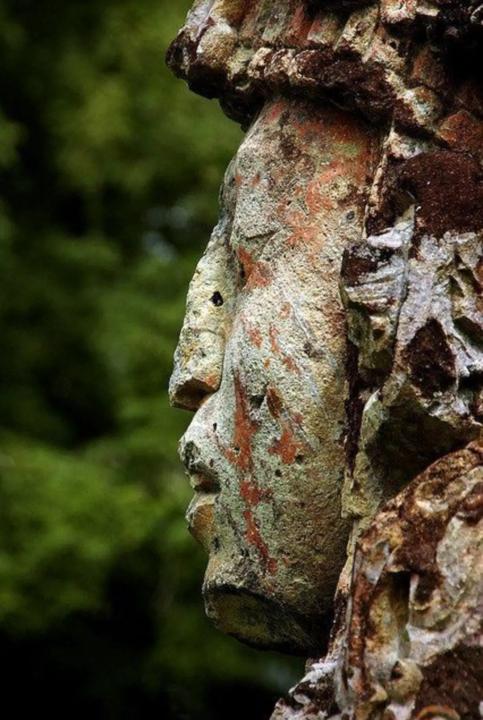
Close up of Stela H at the Copán Ruins in western Honduras. Located in the Great Plaza, this Mayan monument depicts Waxaklahun Ubah K'awil (also known as 18 Rabbit), the 13th ruler of Copán.
1
0
🔥
16h •
Dogu
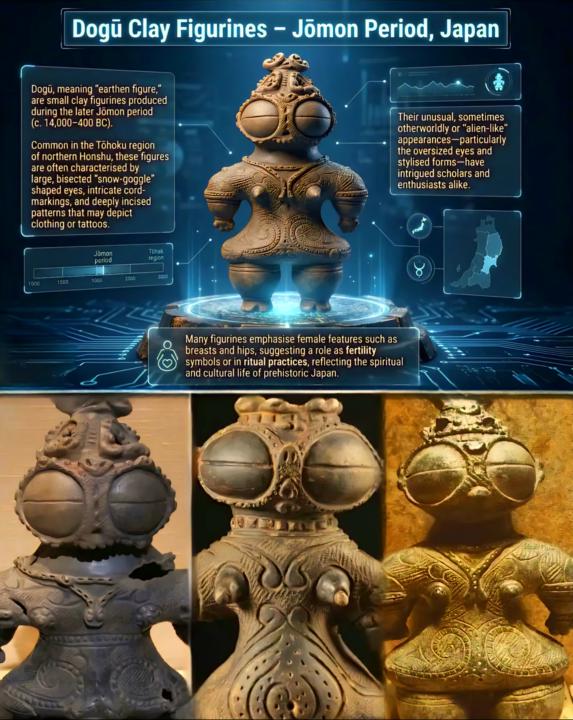
Dogū, meaning "earthen figure," are small clay figurines produced during the later Jōmon period (c. 1000-400 ВСЕ). Common in the Tohoku region of northern Honshu, these figures are often characterised by large, bisected "snow goggle" shaped eyes, intricate cord markings, and deeply incised patterns that may depict clothing or tattoos. Their unusual, sometimes otherworldly or "alien like" appearances particularly the oversized eyes and stylised forms have intrigued scholars and enthusiasts alike. Many figurines emphasise female features such as breasts and hips, suggesting a role as fertility symbols or in ritual practices, reflecting the spiritual and cultural life of prehistoric Japan.
1
0
🔥
16h •
Babylonian
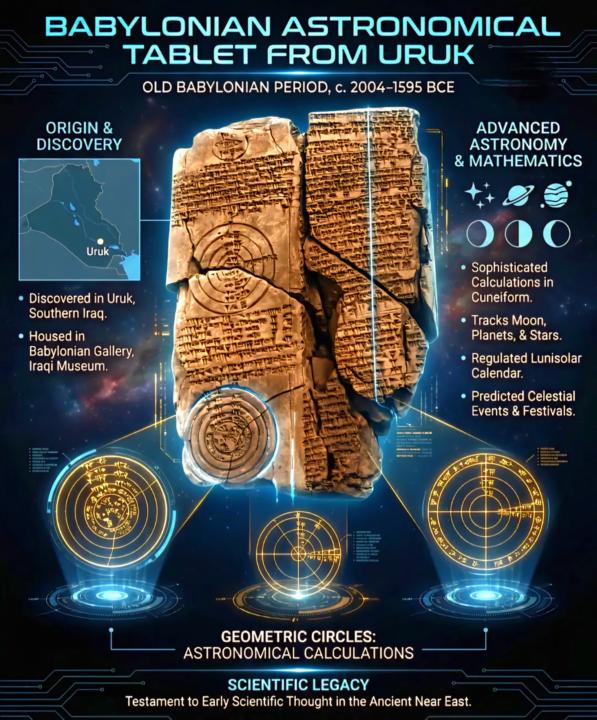
An ancient Babylonian clay tablet discovered at Uruk (modern Warka) in southern Iraq dates to the Old Babylonian period, approximately 2004-1595 BCE. Inscribed in cuneiform script, the tablet features three distinct geometric circles containing astronomical calculations. These circular diagrams reflect the sophisticated mathematical and observational methods developed in Mesopotamia, where scholars tracked the movements of the Moon, planets, and stars with remarkable precision. Such records were essential for regulating the lunisolar calendar, predicting celestial events, and organising religious festivals tied to cosmic cycles. The combination of geometry, numerical notation, and astronomical data illustrates the advanced scientific traditions of ancient Babylonia. The tablet is currently housed in the Babylonian Gallery of the Iraqi Museum, where it remains an important testament to early scientific thought in the ancient Near East.
1
0
1-10 of 2,847

🔥
@75467413
Free Tinker. Seeker. Labor Relations and Human Resources "HR Department"
Active 2h ago
Joined Aug 26, 2025
Lisboa - Lisbon
Powered by