Activity
Mon
Wed
Fri
Sun
May
Jun
Jul
Aug
Sep
Oct
Nov
Dec
Jan
Feb
Mar
What is this?
Less
More
Owned by Lisa
🔥 Connecting Christian women as we live, lead and joyfully create with Holy Spirit.
Memberships
SteppingintotheLight Healing
27 members • Free
skool Intelligence
71 members • Free
Skooly
269 members • $9/month
Peace, Purpose & Provision
37 members • Free
Essence and Ease
44 members • Free
Skool Extensions 🧩
283 members • Free
Online Profit Mastery
494 members • Free
the skool CLASSIFIEDS
1.6k members • Free
Synthesizer: Free Skool Growth
39.5k members • Free
14 contributions to Connected Through Play
🔥
8d •
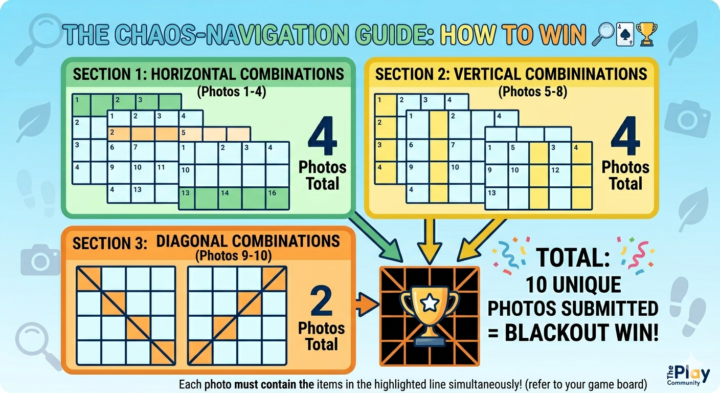
Start Your Engines! Bingo Card Ready
Ok! I’m ready to see your creativity in play. First, this is not a competition in the sense of a winner and losers. This is a game where everyone wins. You may ask how is this possible everyone wins and I’ll tell you. Act together as a family, a friend group, heck if you must, go solo and have someone take your picture. The goal is to be creative, have fun, and build memories. Kickoff begins tomorrow but here is your card. Start planning and start playing. Have fun!! I’ll be here all weekend to answer your questions. @Adam Formanek @Betty Jo Winters @Blue Mojo @Celia Kibler @Daniel Cavaretta @Des Cooke @Evelene Sterling @Elizabeth Houston @Erica Sisco-Dube @Erin O'Neill @Gus Gray @Jacqueline Hutchinson @Janell Bitton @Lisa Vanderveen @Max Orlewicz @Mayelice Castro @Mukkove Johnson @Sharon Otaguro @Ruben Plasmeijer @Paisley Kiddie @Ramona Zihlke @Rene Kerkdyk @Roslyn Hill @Scott Brewster @Shannon Boyer @Tim Tindle @Wendy Wiseman

🔥
2 likes • 8d
@Mary Nunaley ah! Okay makes sense :)
🔥
2 likes • 8d
@Daniel Cavaretta oh that would be fun!
🔥
18d •
Points, Badges, and Leaderboards oh my!
As someone who likes to play for a living and helps clients design gamified learning experiences, I’d like to know what motivates you to participate in a community, a sport, a sales competition. Is it:
Poll
4 members have voted

🔥
4 likes • 18d
has to be something that grabs my attention - and if I see posts/comments from people I love following, I go check them out :)
🔥
2 likes • 18d
@Mary Nunaley usually specific people that I know I appreciate everything they post :)
🔥
19d •
The Story of "Me" (Narrative Identity)
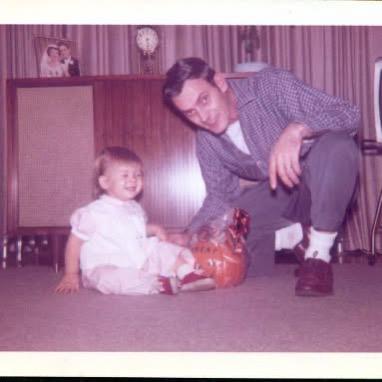
One of the most powerful tools for resilience is having a "Strong Narrative Identity." This is the ability to look at the events of your life, the wins, the losses, and the messy middle and weave them into a story that makes sense. Research shows that kids who know their family stories and understand that life has "ups and downs" are more emotionally resilient. When we help our kids tell their own stories, we move them from being "products" of their environment to being the authors of their lives. Literacy is the tool they use to claim that authority. Have you shared any of your story with your kids? It’s not always easy, especially if you grew up in a challenging environment. What’s one story you would share?
🔥
2 likes • 19d
@Mary Nunaley I bet!! Looking forward to hearing my kids' :)
🔥
1 like • 18d
@Mubarak Olamilekan absolutely!!
🔥
22d •
The Buffon’s Needle Challenge: Finding Pi in the Random
As our kids get older, math often stops feeling like "play" and starts feeling like "work." We trade the building blocks for complex formulas, and the performance pressure gets heavier. But what if we could find a universal constant like Pi just by dropping toothpicks on the kitchen floor? THE SCIENCE: Geometric Probability In 1777, Georges-Louis Leclerc, Comte de Buffon, discovered that if you drop needles on a floor with parallel lines, the probability of the needle crossing a line is directly related to Pi. It’s one of the oldest problems in geometric probability, and it feels like a magic trick. 🛠️ GATHER YOUR GEAR The "Needles": A box of toothpicks, unsharpened pencils, or even dry spaghetti (all must be the same length!). The "Floor": A hardwood or tile floor with parallel lines. Note: If you have carpet, just use a large piece of paper and draw parallel lines exactly two "needle-lengths" apart. The Tracker: A pen and paper to tally the drops. 🎲 HOW TO PLAY 1. The Set-Up: Ensure the distance between your lines is exactly twice the length of your "needle" (e.g., if using 2-inch toothpicks, your lines should be 4 inches apart). 2. The Drop: Have your teen drop the items randomly from about waist height. (No aiming allowed!) 3. The Tally: • Total Drops (N): How many items did you drop in total? • Total Crosses (C): How many items are touching or crossing a line? 🧮 THE LOGIC FLIP (The Formula) Here is where the magic happens. Because of the way you set up the lines (distance = 2x length), the math simplifies beautifully (see image at end of post for formula) Example: If you drop 100 toothpicks and 31 of them cross a line, your calculation would be 100 / 31 = 3.22. The more you drop, the closer you get to the "magic" 3.14! @Lisa Vanderveen this one’s for you! For kids ages 15–17, mention that insurance companies use similar "randomness models" to predict risk. It turns a "math game" into a real-world career conversation!

🔥
1 like • 20d
This is SO Cool!! Thank you!
🔥
Feb 23 •
Moving from Hard Stop to Gentle Fade
I’ve got a question for you, and hang with me as it does connect to our topic today. Ever tried to quit diet pop or sugar "cold turkey"? It’s rough. You’re edgy, you’ve got a headache, and you’re generally not fun to be around. You did not want to be near me when I stopped my 12 Diet Coke a day habit, trust me🤦🏻♀️ Well, for our brains, screens provide a massive hit of dopamine. When we snatch a device away abruptly, we aren't just taking a toy, we are causing a literal "dopamine crash." As I’ve been exploring this topic, I’ve noticed researchers and other experts suggest that gradual transitions from screen to other activities are the secret to keeping the peace. Instead of a hard "No more screens starting now!", instead try to focus on "The Fade." I think of “The Fade” like turning down the heat on a pot of soup instead of yanking it off the burner. If you abruptly turn off the heat, everything inside keeps bubbling, splashing, and sometimes boiling over. But if you lower the heat gradually, the soup settles, the steam softens, and usually, nothing makes a mess. Our nervous systems work the same way they need that gentle step-down so the energy has somewhere to go besides straight into a meltdown. By creating predictable rhythms and shaving off small chunks of time, we allow their nervous systems to adjust without the fireworks. Practical Tips by Age to Implement the Fade: 🌉 Ages 3–5: Use a "Bridge Activity." Instead of just turning off the show for example, talk about it for 60 seconds as you transition. "Wow, Bluey was silly! Can you hop like Bingo all the way to the kitchen for snack time?" ⏲️ Ages 6–9: Try the "15-Minute Shift." This week, move the "Off" time up by just 15 minutes and replace it with something tactile, like Legos or a coloring book. Small enough they won't fight it; big enough to make a difference. 🅿️ Ages 10–11: Negotiate a "Device Parking Lot." Decide together on one room in the house (like the dining room or the "reading chair") where devices aren't allowed to go. It’s not a ban; it’s a "Zone."

🔥
1 like • 25d
@Mary Nunaley Thank you! He got it done with just a tiny bit of assembly help and time to spare this morning :)
🔥
1 like • 25d
@Mary Nunaley
1-10 of 14

🔥
@lisav
Walking with Holy Spirit and leading the way from exhaustion to joy-filled creation!
Active 1m ago
Joined Feb 13, 2026
BC, Canada
Powered by