Activity
Mon
Wed
Fri
Sun
May
Jun
Jul
Aug
Sep
Oct
Nov
Dec
Jan
Feb
Mar
What is this?
Less
More
Owned by Shannon
The #1 public place to promote your Skool, learn how to build connections, and collaborate with Skoolers. Real connections & growth without spam.
Create a high-quality online course that gets real results and showcases your expertise alongside an award-winning educator with 20+ years in the biz
Memberships
skool Intelligence
71 members • Free
Skoolers
191.8k members • Free
Skool Scale Camp
4.8k members • Free
Skooly
270 members • $9/month
Capitalyst
28 members • Free
Consistent Characters
110 members • Free
Skool Extensions 🧩
283 members • Free
LinkedIn Strategy Lab
254 members • Free
The Kind Copy Collective
41 members • $49/month
3 contributions to Connected Through Play

🔥
26d •
The "Right Answer" Trap
One of the heaviest parts of the "lead vest" our kids wear in math is the fear of being wrong. In many classrooms, a single misplaced decimal point means a zero. This creates an environment where kids stop thinking about the logic of the problem and start panicking about the result. To counter this, we need to value Estimation as much as calculation. Estimation is actually a higher-level cognitive skill. It requires "number sense,” the ability to see the "bigness" or "smallness" of a situation without getting bogged down in the weeds. When we ask our kids to give us a "reasonable guess" instead of a "perfect answer," we give their brains permission to play with possibilities. This builds the confidence they need to tackle complex problems later on, because they already know what the answer should roughly look like. Today, we’re taking the pressure off the "correct" number and celebrating the "reasonable" one. Where do you use estimation in your day to day?


🔥
1 like • 26d
Great point!
🔥
1 like • 26d
@Mary Nunaley Everywhere!
🔥
Mar 5 •
Moving from Passenger to Pilot
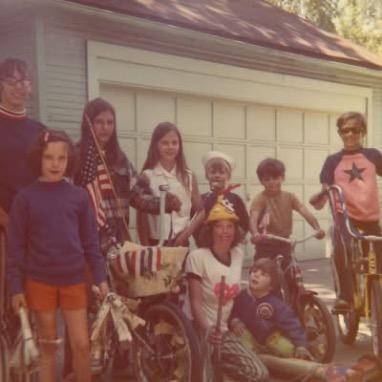
I don’t know what your childhood was like, but my kids’ childhood was certainly more structured than mine. Of course, my kids also chose the competitive athlete route, which by its very nature requires more rigor. Have you noticed similar differences in your own home? This brings me to a recurring theme I’m seeing among those close to me and the community at large: children often feel like "passengers." Their schedules are curated, their hobbies are rigid, and their goals are often set by adults. This lack of agency is a major contributor to the rise in childhood anxiety. It’s worth reflecting on our own childhoods. Most of us grew up with more "white space", hours where no adult was checking a clipboard. We had the freedom to be bored and to make our own choices. Play is how our kids reclaim that steering wheel. By stepping back and letting them lead, we show them that their ideas carry weight, independent of any grade or trophy. What differences have you noticed from your childhood compared to kids today?
🔥
3 likes • Mar 5
Definitely a lack of independent outdoor play! Indoor play isn't an issue, but I can tell that I'll have a hard time letting go of the outdoor supervision...
🔥
2 likes • Mar 5
@Jacqueline Hutchinson That’s a big difference. There aren’t as many other kids outside as when we were kids…
🔥
Feb 1 •
The One-Round Ritual
Which one of these connection “rules” are you most likely to try this week? @Erin O'Neill, @Yu-Tzu Huang, @Mukkove Johnson, @Shannon Boyer tagging you to get the conversation started.
Poll
3 members have voted

🔥
2 likes • Feb 1
Definitely trying to foster more independence!
🔥
1 like • Feb 1
@Mary Nunaley Mostly just being aware of situations where I can step back and guide as opposed to doing.
1-3 of 3

🔥
@shannonlboyer
Award-winning educator with an M.Ed and 25+ years of experience in course design. I help you create high-impact courses that stand out and sell.
Active 7h ago
Joined Jan 30, 2026
Canada
Powered by